flagship carpets made for SensoryEdge
Classroom Management

How to Choose a Calming Rug for a Calm-Down Corner

A calm-down corner works when everything in it signals safety before a child has to decide anything. The rug is where that signal starts — the right size, texture, and color does quiet work before anyone says a word. This guide covers what to look for, how to set the corner up around it, and how to make the case to your administration.


[…]

dusty meadow rug
Classroom Management

The Cost Per Year of Classroom Furniture

Most purchasing decisions for classroom rugs, sensory panels, and activity furniture are made by comparing upfront prices. That comparison almost always makes the cheaper option look better than it is. The number that actually matters is cost per year – what you spend divided by how long it lasts.

[…]

Small Classroom Changes That Help Children Feel Ready to Learn
Classroom Management

Small Classroom Changes That Help Children Feel Ready to Learn

Children often show you they’re not ready to learn before the lesson has properly begun. They hover by the door, fiddle with coats, forget the first instruction or spend five minutes finding the pencil that was in their hand. These moments can look like poor behaviour when they may be signs that the room has not helped them settle into the task.

[…]

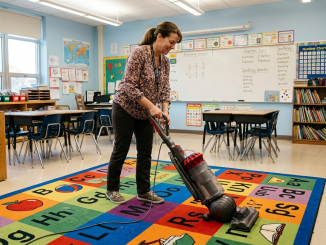
vacuuming your classroom rug
Classroom Management

How to clean classroom rugs 

A practical care guide for nylon classroom rugs covering daily maintenance, spill response, the stain-specific solution chart, and what not to do. Built from manufacturer guidance and 20 years of classroom rug experience.

[…]

five minute warning
Classroom Management

The Five-Minute Warning – Rethinking Classroom Transitions

ou’ve said it hundreds of times. “Five more minutes.” Then, three minutes later: “Two more minutes.” Then: “Okay, time to clean up.” Then you wait. And wait. Then you repeat it. Then you raise your voice a little. Then – finally – the class transitions, sort of, in a loose, straggling, half-negotiated way that takes another four minutes on top of the warning you already gave. This is not a you problem. The five-minute verbal warning is one of the most universally used transition tools in early childhood classrooms, and it is also one of the least reliably effective. Understanding why it fails – and what actually works – can recover a meaningful amount of time and energy from every single school day.

[…]