
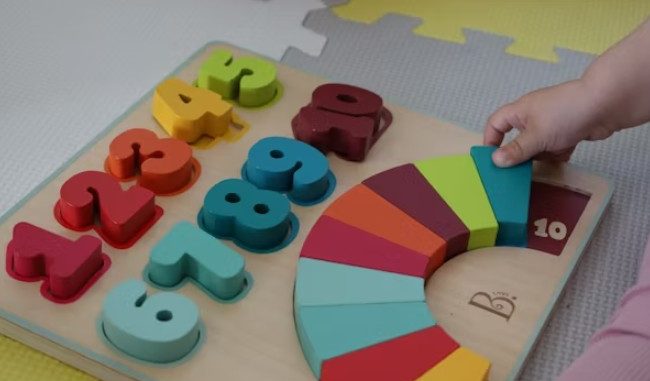
Mathematics anxiety is real, and it often begins earlier than we think. As parents and educators, we’re constantly searching for ways to make numbers less intimidating and more intuitive for children at every stage of their learning journey. The good news? Mathematical confidence isn’t built through rote memorization or endless worksheets alone. It’s cultivated through sensory experiences, creative exploration, and yes, even a bit of strategic fun.
The path to mathematical proficiency looks different for a three-year-old exploring shapes in a sensory bin than it does for a teenager preparing for university entrance. Yet these experiences are more connected than most people realize. When we examine how mathematical thinking develops from those crucial early years through to advanced academic preparation, we discover that the most effective approaches share common threads: they engage multiple senses, connect abstract concepts to tangible experiences, and transform learning from a chore into discovery.
The Sensory Foundation: Why Early Experiences Matter
Before children ever sit down with a pencil to solve equations, they’re building mathematical understanding through every sensory experience. When a toddler stacks blocks and watches them fall, they’re experimenting with height, balance, and quantity. When they sort toys by color or size, they’re categorizing and comparing—fundamental mathematical operations disguised as play.
Research in cognitive development consistently shows that mathematical concepts rooted in sensory and motor experiences create stronger neural pathways than those introduced purely through abstract symbols. This is why progressive educators emphasize hands-on learning materials, movement-based activities, and real-world applications. The brain doesn’t naturally think in numbers and equations; it thinks in patterns, relationships, and spatial awareness.
Consider how children naturally learn “more” and “less” through daily experiences—more crackers at snack time, less juice in their cup. These aren’t mathematical exercises in their minds; they’re practical observations about their world. The brilliance of quality early education lies in recognizing and expanding these natural learning moments. In preschool Singapore, where educational standards are globally recognized, leading preschools have embraced this philosophy by creating environments rich with mathematical opportunities that feel nothing like traditional “math class.”
These early foundations do more than prepare children for formal schooling—they shape their entire relationship with mathematical thinking. A child who associates numbers with frustration and confusion at age four will likely carry that anxiety forward. Conversely, one who discovers mathematical patterns through joyful exploration develops confidence that becomes self-reinforcing. They’re willing to take risks, make mistakes, and persist through challenges because math feels approachable rather than threatening.

Making Abstract Concepts Tangible: The Power of Themed Learning
As children progress beyond the preschool years, maintaining that sense of discovery becomes both more important and more challenging. Traditional worksheets and textbooks have their place, but they rarely spark the kind of engagement that leads to deep understanding. This is where creative, themed approaches prove invaluable.
Seasonal activities offer particularly powerful teaching opportunities because they tap into children’s existing excitement and curiosity. Think about autumn—the changing leaves provide natural sorting activities (by color, size, shape), while harvest themes invite counting, measurement, and even basic multiplication through grouping. Halloween, beyond its candy and costumes, presents surprisingly rich mathematical territory.
When children engage with halloween math activity sheets that incorporate pumpkins, ghosts, and trick-or-treat scenarios, they’re not just completing assignments—they’re solving problems within a context that feels relevant and fun. A word problem about distributing candy among trick-or-treaters resonates differently than one about generic items in a store. The emotional connection to the theme lowers anxiety and increases persistence when problems become challenging.
The effectiveness of themed learning extends beyond motivation, though. When mathematical concepts are embedded in rich contexts, children develop stronger mental models. Comparing the weights of different pumpkins teaches measurement more memorably than abstract numbers on a scale. Creating symmetrical jack-o-lantern designs introduces geometric principles through creative expression. Even simple Halloween-themed counting activities for younger children reinforce one-to-one correspondence and cardinality in ways that feel playful rather than pedagogical.
What makes these approaches particularly valuable is their adaptability across age groups. Younger children might count Halloween characters, while older ones solve algebraic equations disguised as spooky scenarios, and middle-years students tackle statistical problems about candy distribution patterns. The theme provides familiar ground that allows educators to introduce increasingly sophisticated mathematical thinking without overwhelming learners.

Building Systematic Skills Through the Middle Years
Between early childhood and advanced academic preparation lies a critical period where mathematical foundations either solidify or crumble. These middle years—roughly ages eight through twelve—represent when many students decide whether they’re “math people” or not. This self-identification can have lasting consequences, making it essential that we provide appropriately challenging yet supportive learning experiences.
During this phase, the playful approaches of early childhood need to evolve into more systematic skill-building, but without losing the sense of discovery and relevance. Students at this level benefit from understanding the “why” behind mathematical procedures, not just the “how.” When they grasp that multiplication is repeated addition, or that fractions represent parts of wholes, they develop flexible thinking that allows them to approach problems from multiple angles.
Sensory and experiential learning remains important, though it takes different forms. Manipulatives might become more sophisticated—fraction tiles instead of counting bears, geometric construction tools instead of shape sorters. Real-world applications become more complex: calculating the best value at a store, determining how long a trip will take at different speeds, or figuring out measurements for a recipe.
The goal during these years is building automaticity with basic operations while simultaneously developing problem-solving strategies. Students need to know their multiplication tables, but they also need to know when and why to multiply in novel situations. They should become comfortable with fractions, decimals, and percentages, understanding these as different representations of the same underlying concepts rather than isolated topics.
This is also when learning differences and gaps become more apparent. Some students race ahead, ready for algebraic thinking well before their peers. Others struggle with foundational concepts that weren’t fully mastered earlier. Effective education during this period requires differentiation—meeting students where they are while providing appropriate challenges. Small group instruction, adaptive learning technologies, and varied teaching approaches all play roles in ensuring no one falls through the cracks or stagnates from boredom.

The Transition to Advanced Mathematical Thinking
As students approach their teenage years and begin preparing for higher education, mathematical learning takes on new dimensions. The stakes feel higher, the concepts become more abstract, and the pace accelerates. This is where years of foundational work either pay dividends or reveal gaps that need addressing.
Advanced mathematics—algebra, geometry, trigonometry, calculus—requires not just computational skill but conceptual understanding and logical reasoning. Students must learn to think in variables and abstractions, to construct and analyze logical arguments, and to apply mathematical frameworks to increasingly complex problems. For many, this transition proves challenging not because they lack ability but because their earlier mathematical education emphasized procedures over understanding.
The most successful approaches to advanced mathematics maintain connections to that sensory and experiential foundation while building sophisticated analytical skills. Good educators help students visualize algebraic relationships, physically model geometric principles, and understand calculus through real-world rates of change before diving into formal notation. They recognize that even at advanced levels, learning remains more effective when it engages multiple modes of thinking.
For students in rigorous academic programs, particularly those preparing for university entrance examinations, structured support becomes invaluable. This is especially true in education systems with clearly defined curricula and high-stakes assessments. JC Math tuition aligned with MOE syllabus provides students with focused preparation that addresses both content mastery and exam technique, ensuring they can demonstrate their understanding effectively under testing conditions.
Such structured programs work best when they build on solid foundations rather than attempting to fill fundamental gaps under time pressure. Students who enter advanced courses with confidence in their mathematical abilities and flexibility in their thinking are better positioned to handle increasing complexity. They see new concepts as extensions of familiar patterns rather than entirely foreign territory.
The relationship between teacher and student also evolves at this level. While younger children need enthusiastic encouragement and playful engagement, teenagers benefit from being treated as developing mathematicians capable of genuine mathematical thinking. They respond to intellectual challenges, appreciate understanding the deeper logic behind procedures, and value seeing how mathematics connects to their future aspirations—whether in engineering, economics, medicine, or countless other fields.
Connecting the Continuum: From Blocks to Calculus
When we step back and view mathematical education as a continuum rather than discrete stages, patterns emerge. The student who joyfully explored patterns with blocks in preschool and the teenager confidently tackling calculus problems are engaged in fundamentally similar activities: identifying relationships, testing hypotheses, and applying logical thinking to reach conclusions.
What changes is the level of abstraction and the tools available. But the core disposition—curiosity about how things work, persistence in the face of challenge, confidence in one’s ability to figure things out—remains constant. This is why early experiences matter so profoundly. We’re not just teaching counting or shapes; we’re shaping how children see themselves as thinkers and problem-solvers.
The most effective mathematical education recognizes this continuity. It doesn’t treat early childhood as merely “pre-math” or advanced studies as disconnected from those foundations. Instead, it sees each stage as building on previous experiences while preparing for future challenges. The sensory richness of early learning gives way to more abstract thinking, but concrete examples and visual representations remain valuable tools even in advanced mathematics.
Parents and educators can support this continuity by maintaining certain principles across all stages: making learning active rather than passive, connecting mathematics to real-world contexts and interests, celebrating effort and growth rather than just correct answers, and ensuring that children see mathematics as a creative, human endeavor rather than a fixed set of rules to memorize.
Practical Strategies for Every Stage
So what does this understanding mean for practical application? How can parents and educators apply these insights at each stage of mathematical development?
For Early Years (Ages 3-6): Focus on making mathematics visible in daily life. Count steps while walking, sort laundry by color or type, cook together and discuss measurements, play board games that involve counting and strategy. Choose toys and activities that encourage spatial reasoning—blocks, puzzles, pattern-making materials. Most importantly, model positive attitudes about mathematics, avoiding phrases like “I’m not a math person” that children internalize.
For Elementary Years (Ages 6-12): Balance skill-building with problem-solving. Yes, practice basic facts, but also pose open-ended questions that have multiple solution paths. Incorporate mathematics into projects and interests—measure and calculate for building projects, use statistics for sports analysis, explore probability through games. When children struggle, help them develop metacognitive strategies: What do you know? What do you need to find out? What strategies might work?
For Advanced Years (Ages 13+): Emphasize understanding over memorization, though both have roles. Help students see connections between different mathematical topics rather than treating each as isolated. Encourage them to explain their reasoning, which deepens understanding and reveals misconceptions. For those facing important examinations, ensure they get adequate practice with exam-format problems while maintaining focus on genuine understanding rather than tricks and shortcuts that may not transfer.
Across all stages, address anxiety directly. Mathematical anxiety is learned, not inherent, and can be unlearned through positive experiences and reframing. Help children see mistakes as learning opportunities rather than failures. Praise specific efforts and strategies rather than general ability. Create low-stakes opportunities for practice where experimentation and risk-taking feel safe.
[Image 5: Diverse group of students of various ages engaged in different mathematical activities, showing progression of skills] Alt text: Mathematical learning progression from early childhood through advanced studies
The Role of Environment and Resources
We can’t discuss effective mathematical education without addressing environment and resources. Learning doesn’t happen in a vacuum—it’s profoundly influenced by physical spaces, available materials, and social contexts.
Quality learning environments, whether at home or in formal educational settings, share certain characteristics. They offer varied materials that support different learning styles and stages. They display mathematical ideas visually through charts, manipulatives, and examples. They create spaces for both independent work and collaboration. They minimize distractions while providing appropriate challenges.
Resources matter, but abundance isn’t the key—appropriateness is. A well-chosen set of base-ten blocks teaches place value more effectively than a dozen random math apps. A few engaging problem-solving books prove more valuable than hundreds of repetitive worksheets. Quality materials invite exploration and support understanding in ways that generic resources don’t.
This is where educational philosophy meets practical implementation. Progressive approaches to mathematics education recognize that one-size-fits-all curricula don’t serve diverse learners well. Students benefit from exposure to varied teaching methods, opportunities to approach concepts through different modalities, and flexibility to progress at appropriate paces.
Technology has expanded resource options dramatically, offering adaptive platforms, engaging visualizations, and global connections. However, technology works best as a complement to, not replacement for, hands-on experiences and human guidance. The most effective programs blend digital tools with physical manipulatives, independent exploration with direct instruction, and practice with application.
Looking Forward: Preparing for an Unknown Future
One final consideration deserves attention: we’re preparing students for a future we can’t fully predict. The mathematical skills required for career success continue evolving, with data literacy, computational thinking, and statistical reasoning becoming increasingly central across fields.
This reality argues for education that develops flexible, adaptable mathematical thinking rather than just skill with specific procedures. Students who understand core principles and can apply them in novel contexts will navigate changing demands more successfully than those who’ve merely memorized algorithms. Those who’ve learned to approach problems systematically, think logically, and persist through challenges possess transferable skills that extend beyond mathematics.
This doesn’t mean abandoning foundational skills—fluency with basic operations and algebraic manipulation remains important. But it does mean ensuring these skills sit within broader problem-solving frameworks. Students should leave their mathematical education able to estimate and check reasonableness, represent problems in multiple ways, explain their thinking, and learn new mathematical ideas independently when needed.
The journey from early childhood curiosity to advanced mathematical competence is neither straight nor simple. It requires patient nurturing of dispositions, systematic development of skills, and persistent attention to understanding. But when approached thoughtfully, with attention to how humans naturally learn and what makes mathematics meaningful, it’s a journey that transforms not just academic ability but lifelong confidence and capability.
Mathematics is, ultimately, a human invention—a system we created to understand patterns, solve problems, and make sense of our world. When we teach it as such, connected to real experiences and purposes, we give children access to a powerful set of tools for thinking and creating. Whether they become engineers or artists, scientists or entrepreneurs, the mathematical thinking they develop serves them throughout life in ways that extend far beyond any specific formula or procedure they memorize.
The key is starting right, building consistently, and never losing sight of the goal: not just students who can do mathematics, but people who understand it, appreciate it, and feel empowered by it.
