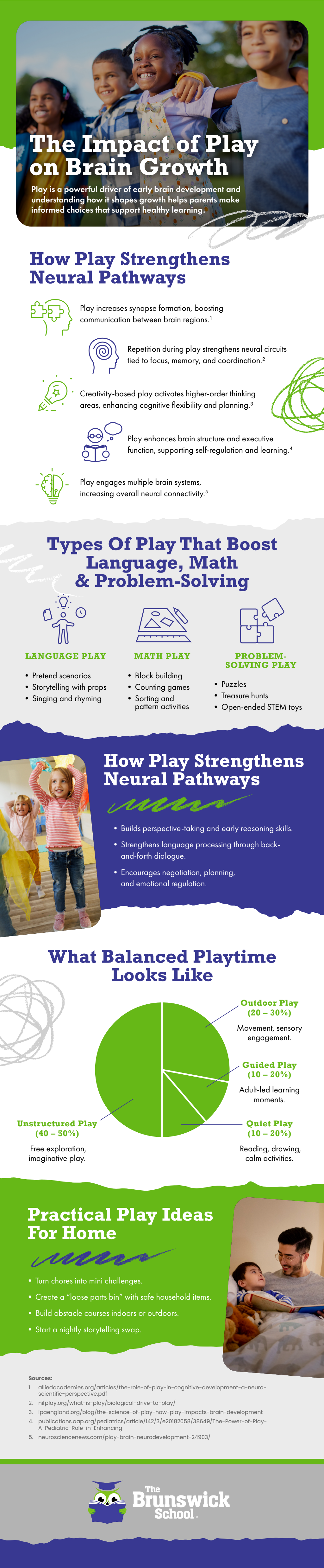
Play may look simple on the surface, but it drives critical brain development in children. During play, neural connections form at a rapid pace. These connections shape how children think, move, communicate, and regulate emotions. Early experiences influence the architecture of the brain, and active play provides repeated opportunities for growth. Research shows that hands-on exploration, pretend scenarios, and physical movement all contribute to stronger cognitive and social skills.
Cognitive Growth Through Exploration
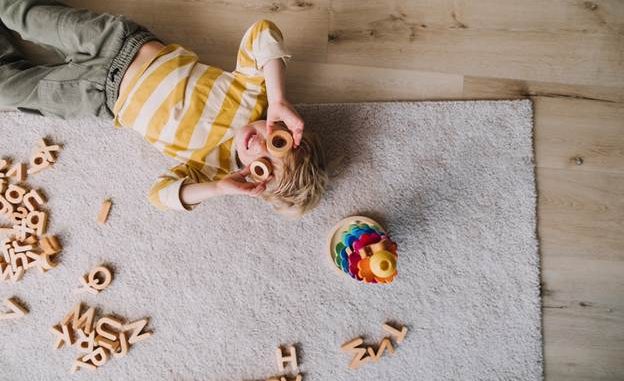
Unstructured play encourages curiosity and problem-solving. When children stack blocks, build forts, or create imaginary worlds, they practice planning and flexible thinking. Each choice requires evaluation and adjustment. These activities stimulate the prefrontal cortex, which supports attention, memory, and decision making.
Language skills also develop during play. Conversations with peers or caregivers introduce new vocabulary and sentence structures. Storytelling games strengthen narrative skills and comprehension. Activities often found in toddler education programs combine play with guided instruction to reinforce these developmental gains in a structured setting.
Emotional and Social Development
Play provides a safe environment for children to practice emotional regulation. Games that involve taking turns teach patience and self-control. Cooperative play helps children learn empathy and perspective-taking. Disagreements during group activities offer opportunities to resolve conflict and communicate needs clearly.
Imaginative play supports emotional processing. Acting out scenarios allows children to rehearse real-life situations in a controlled space. This rehearsal strengthens coping strategies and builds confidence.
Physical Movement and Brain Connectivity
Active play supports coordination and sensory integration. Running, climbing, and balancing strengthen the cerebellum and motor pathways. Movement increases blood flow to the brain, which supports attention and learning readiness.
Fine motor activities such as drawing or assembling puzzles refine hand-eye coordination. These skills later support writing and other academic tasks. Physical engagement also releases neurotransmitters that elevate mood and reduce stress.
Play is not a break from learning. It is a primary driver of brain growth during childhood. When children have regular opportunities for active, imaginative, and social play, they build cognitive strength, emotional resilience, and physical coordination that support lifelong development.