
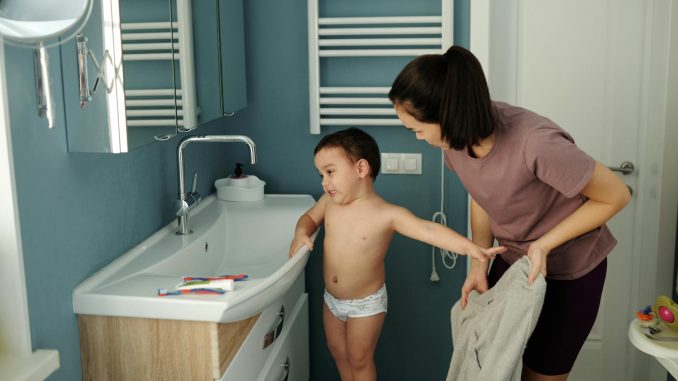
Creating a bathroom that meets the needs of toddlers requires more than just downsizing fixtures; it involves thoughtful design that combines safety, functionality, and creativity. For parents and professionals in children’s health and education, a toddler-friendly bathroom supports independence, teaches hygiene habits, and offers a secure, engaging space where little ones feel confident.
Whether you’re updating a home or designing a child-focused facility, the right setup can make hygiene routines easier and more enjoyable. Here’s how to balance safety, style, and fun in a bathroom that grows with your child.
Prioritizing Safety First
Bathrooms are filled with potential hazards: slippery floors, hard surfaces, and sharp corners. Safety must come first.
- Non-slip flooring and rubber-backed mats prevent falls.
- Rounded edges on counters and fixtures reduce injury risk.
- Water temperature controls and anti-scald devices help prevent burns.
- Locked or high storage keeps cleaners and razors out of reach.
- Toilet locks and soft-close lids add extra peace of mind.
- Wall-mounted grab bars can support toddlers learning to stand and move independently.
- Nightlights and faucet covers enhance visibility and reduce injury risk.
Styling With Toddlers in Mind
Safety doesn’t have to come at the expense of style. With the right choices, bathrooms can be functional and beautiful.
- Step stools with grip pads offer sink access without altering standard fixture height.
- Soft, cheerful colors like light greens or pastels make the space inviting and emotionally calming.
- Towel hooks and mirrors at toddler height encourage independence.
- Easy-clean materials simplify maintenance and reduce mess stress.
A cohesive look that incorporates playful touches — like animal-themed rugs or patterned shower curtains — can make the room more engaging for little ones without compromising sophistication.
Encouraging Healthy Habits Through Design
Bathrooms can teach hygiene habits in a fun, accessible way. The goal is to turn daily routines into positive, teachable moments. Encouraging self-care through design helps build both hygiene habits and confidence.
- Interactive fixtures like motion-activated faucets or colorful soap dispensers make routines engaging.
- Visual aids such as decals or charts guide toddlers through handwashing and brushing steps.
- Child-chosen accessories foster ownership and routine participation.
- Open shelving and baskets make it easy for toddlers to reach essentials and learn to put them away.
Designing a Space That Grows With Your Child
Toddlers grow quickly, so flexibility matters. Wall decals, themed accessories, and playful décor can be easily swapped as your child matures, keeping the space fresh, engaging, and age-appropriate without requiring major changes. Incorporating adjustable storage, modular fixtures, and transitional design elements ensures the bathroom continues to meet evolving needs well into the school-age years.
- Modular storage and adjustable organizers adapt to changing needs.
- Neutral fixtures paired with themed accessories are easy to update.
- Removable aids like faucet extenders and potty chairs ensure a smooth transition without full remodels.
Where Safety Meets Style — and Play
A toddler-friendly bathroom should blend safety, function, and fun. For professionals designing spaces in preschools or clinics, the same principles apply, just scaled for shared use and varied developmental stages.
Bathrooms are more than utilitarian. They’re environments where children practice self-care and independence, laying the foundation for lifelong hygiene habits.
If you’re considering a home upgrade, thoughtful bathroom remodeling can integrate child-focused features while enhancing the space for years to come. Features like step-friendly vanities, pull-out drawers, and easy-access storage can support your toddler now and continue to serve as they grow.
With the right design, a bathroom becomes more than a place for washing up; it becomes a joyful, confidence-building part of a child’s daily routine. Thoughtful details not only support physical safety and independence but also contribute to emotional comfort, learning, and routine consistency—key ingredients in early development.
Author bio: Davis Glassberg is the Product Manager at Bath Concepts, which transforms bathrooms into spa-like, dream retreats. Glassberg is in charge of training and developing innovative new products for the bath industry. Glassberg has been actively involved in acrylic bathroom remodeling for over three decades. During that period, he has designed over 40,000 bathrooms and trained more than 10,000 design consultants across the U.S.
