
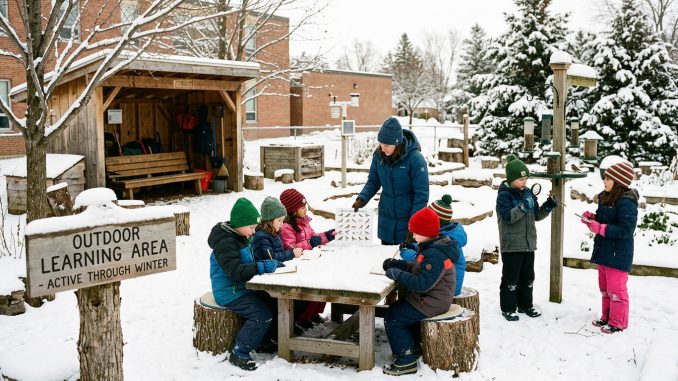
Outdoor learning areas tend to be busiest in spring and summer, when raised beds are full and there’s plenty growing to check on. Once the last of the autumn sowing is finished, that sense of purpose can drain away fast, and a space that felt full of jobs in September starts to look like mud and bare stems by November. Practitioners often respond by using the space less, saving it for fine days, which leaves it idle for most of the term.
Keeping the space useful through winter doesn’t mean fighting the season. It means choosing a handful of things that stay interesting when the beds are empty, giving children a reason to head outside on a grey morning, and being honest about which parts of the space need protecting until spring rather than using them. A little planning now saves the area from becoming a summer-only extra.
What Stays Active Once The Growing Stops
Once the beds have little left to offer, a feeding station becomes the one thing in the outdoor area that’s genuinely worth a daily visit. Blue tits, robins and blackbirds turn up reliably for suet packed into a hanging feeder, and refilling it and noting who’s been takes only minutes but gives children a small, repeatable task that changes slightly every day. Smaller birds need to eat a large share of their bodyweight just to survive a cold night, since natural food is scarce in winter and feeders fill the gap. Different children can take turns checking it through the week.
Choosing Planting That Still Earns Its Place
Beds don’t need to sit empty over winter if a few hardy plants are chosen with the season in mind. Winter cabbage, kale, and overwintering onions keep something visibly changing in a vegetable bed, while evergreen shrubs hold their shape when everything around them has died back. Leaving seed heads on plants rather than cutting them down in autumn gives children something to examine, from the structure of a teasel head to the way frost settles on different textures.
Giving Children A Reason To Go Outside On Cold Mornings
Cold, damp mornings are usually when outdoor learning gets quietly dropped from the timetable, even though the sensory benefits of being outside don’t disappear just because the weather has turned. A dry, sheltered spot, even a small one, changes the calculation, giving somewhere to retreat to for five minutes when hands need warming without abandoning the outdoor time altogether. Staff who wrap up warm and keep sessions running through winter often find children adapt to the cold faster than the adults do.
Protecting The Space While Planning Ahead For Spring
Winter is also the point where beds and borders need a bit of upkeep so they’re ready to use again once the weather turns. Covering bare soil with mulch or cardboard stops it compacting under rain and keeps weeds from getting a head start before spring sowing begins. Tools and containers left outside over summer are worth bringing under cover now, since frost and damp do more damage over a few winter months than a full year of ordinary use. Treating winter as a quieter phase rather than a dead one keeps the area part of the routine all year.
