
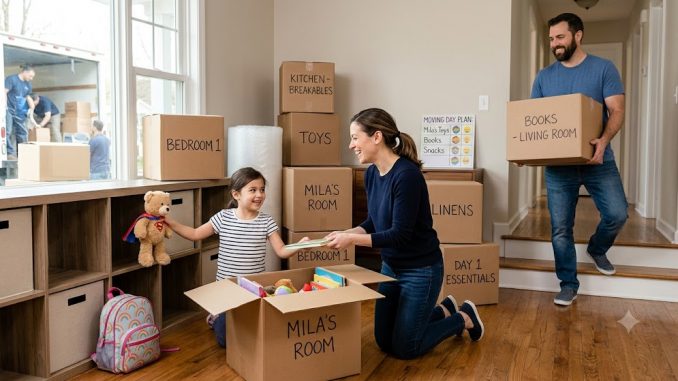
Moving with kids turns an already hectic day into a test of patience for everyone involved. Boxes everywhere, strangers carrying furniture, familiar rooms emptying out: young children read all of it, and they often respond with clinginess, meltdowns, or a sudden refusal to cooperate. The good news is that moving day itself is highly plannable. A little structure keeps children calmer and frees you to actually get the move done.
Keep the Routine Intact Where You Can
Children take comfort in predictability, and a move throws predictability out the window. You cannot preserve everything, but you can protect the anchors of the day. Keep meal times and nap times roughly where they normally fall. Feed everyone a normal breakfast before the work begins. If your toddler always has a mid-morning snack, pack it somewhere you can reach without opening ten boxes. These small constants tell a child that even on a strange day, the important rhythms still hold.
Pack a Comfort Kit They Can Reach
One of the most useful things you can do is set aside a small kit of familiar comforts before the packing frenzy starts. A favorite blanket, a couple of well-loved toys, headphones, a water bottle, and a few snacks go into a single bag that stays with the child all day, not on the truck. When the house is loud and everything else is boxed away, having their own things within reach gives children a portable sense of home.
Give One Adult the Job of the Child
On moving day, trying to supervise the heavy lifting and a young child at the same time serves neither well. The boxes, the furniture, the endless trips out to the truck: these are exactly the tasks that pull a parent away from the child who needs them most that day. The most effective thing you can do for your kids is often to take the physical work off your own plate, so one adult is free to do nothing but stay with them.
For families relocating in and around Hollywood, that usually means arranging help for the load-out in advance. Handing the boxes and furniture to local movers in Hollywood, FL lets one parent stay fully present with the children, keeping them fed, calm, and safely clear of dollies and heavy loads instead of darting between the truck and a restless toddler. Because the crew keeps the day moving, the whole process is shorter and more orderly, which lowers the stress every child in the house picks up on.
If a trusted friend or relative can take the children offsite for the busiest few hours, better still. A morning at the park beats a morning spent underfoot among the packing tape and furniture.
Set Up Their Space First
When you reach the new home, resist the urge to tackle the kitchen or living room first. Unpack the child’s room before anything else. A familiar bed, their own toys, and a recognizable setup give children a secure base while the rest of the house is still in disarray. Keep in mind that a new space affects the way they play and settle, so recreating their old room as closely as possible smooths the adjustment.
Moving day is only the first step, of course. Beyond the logistics, children also need help with the emotional side of the transition in the days and weeks that follow. But get the day itself right, with routine intact, comforts close, and one adult firmly on kid duty, and you set the whole family up for a much gentler landing in the new home.
