
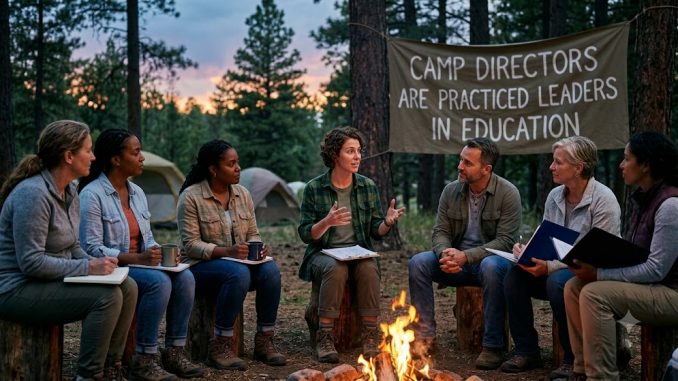
A camp director leads a living community that operates with constant activity and responsibility. They guide teams that are often young and inexperienced while ensuring children feel safe, supported, and engaged.
The role requires fast decisions, strong communication, and deep relationship-building. Camp leaders often work without many of the systems and structures that support traditional school leadership.
This article explores the unique leadership demands of camp direction. It also examines how camp experiences develop skills that transfer directly into broader educational leadership.
The Unique Leadership Demands of the Camp Environment
Leading Without the Architecture of School
School leaders typically operate within established systems. They have policies, procedures, regulations, curriculum structures, and administrative teams supporting their decisions.
These systems provide important guidance during challenges. They also create consistency that helps schools’ function across large communities.
Camp directors often work with fewer layers of infrastructure. Each season requires rebuilding a community with new campers, new staff, and a renewed culture.
This requires directors to create trust quickly. They must establish expectations, develop relationships, and build a functioning environment within a short period.
A director who creates a strong camp culture is practicing a form of community leadership. This ability is highly valuable across educational settings.
Traditional schools often have established cultures that develop over years. Camps require leaders to create that culture repeatedly.
The ability to build belonging quickly is one of the strongest leadership lessons camp provides.
Real-Time Decision Making at Scale
Camp directors make important decisions every day. These decisions involve safety, staffing, conflict management, weather conditions, medical concerns, and program changes.
The director is responsible for children’s wellbeing during every part of the experience. Many situations require action before complete information is available.
This environment creates constant leadership practice. Directors must evaluate risks, communicate clearly, and make decisions that protect the community.
The seasonal structure of camp also accelerates leadership development. A director who manages several summers experiences multiple organizational cycles.
Each season includes staff challenges, unexpected problems, successful programs, and moments requiring adaptation. This creates leadership experience at a pace that many traditional roles cannot provide.
The Leadership Styles That Camp Practice Develops
Effective camp leadership depends heavily on relationships. A director who relies only on authority will struggle to create the trust needed for a successful program.
Strong camp directors often demonstrate servant leadership. They prioritize the wellbeing of campers and staff while building credibility through consistent support.
Servant leaders focus on helping others succeed. This approach aligns closely with modern educational leadership research and effective organizational practices.
Camp directors also develop transformational leadership skills. They create a vision for the experience and connect daily responsibilities to a larger purpose.
A counselor’s daily work may involve activities, supervision, and problem-solving. The director’s role is helping staff understand how those actions shape children’s growth.
Because camp provides immediate feedback, directors quickly see whether their leadership approach is effective. Children respond, staff respond, and the community reflects the quality of leadership.
Camp environments also develop adaptive leadership. Directors regularly encounter problems without simple solutions.
They must decide when to follow established procedures and when a situation requires creativity. This ability to adjust is essential in modern educational leadership.
What Camp Direction Teaches About Staff Development
Camp staff development presents a unique challenge. Many counselors are entering leadership roles for the first time.
They are responsible for children, programs, and daily decisions. Directors have a limited period to build confidence and capability.
This requires intentional training and support. Effective directors do not simply assign responsibilities; they develop people.
The best camp programs create continuous learning environments. Staff receive guidance, practice new skills, and improve through regular feedback.
Feedback culture is one of the strongest indicators of effective organizations. Camp directors build this culture by making communication part of daily operations.
Strong directors encourage staff to discuss challenges openly. They create environments where mistakes become opportunities for improvement.
These practices mirror successful educational organizations. Teachers, administrators, and support staff all benefit from cultures focused on reflection and growth.
The Operational Leadership That Camp Builds
Many people underestimate the operational demands of running a camp. Directors manage programming, transportation, facilities, food service, scheduling, safety procedures, finances, and parent communication.
They often coordinate many systems at the same time. Unlike larger educational organizations, camps frequently operate with smaller administrative teams.
This develops strong generalist leadership skills. Directors learn to understand how different parts of an organization affect each other and how to run a summer camp effectively.
Managing these responsibilities requires organization and strategic thinking. It also requires the ability to prioritize when multiple needs compete for attention.
Camp directors also develop crisis management skills. Emergencies, safety concerns, and unexpected challenges are part of the responsibility.
Handling these situations requires preparation, communication, and emotional control. These skills transfer directly into other educational leadership roles.
A leader who has managed real crises develops confidence under pressure. This experience becomes valuable in any environment where people depend on clear decisions.
What the Educational Leadership Community Should Take From This
Educational leadership pathways should recognize the value of camp leadership experience. Many skills developed in camp settings closely match the abilities required in formal education leadership.
A camp director has managed teams, created culture, solved problems, and supported children. These are the same foundational skills many leadership development programs aim to strengthen.
The context may differ, but the leadership demands are remarkably similar. Camp experience provides meaningful preparation for anyone working with students and communities.
Educational leaders who have not worked in camps can still learn from this model. Camp leadership highlights the importance of presence, trust, and relationship-building.
The strongest camp directors lead through connection rather than distance. They understand that people perform better when they feel valued and supported.
This lesson applies across education. Teachers, administrators, and community leaders all benefit from creating environments built on trust.
Camp leadership also demonstrates the importance of mission-driven work. When people understand why their efforts matter, they are more likely to contribute fully.
Conclusion
Camp directors are some of the most practiced leaders in education because of the unique demands of their environment. The seasonal timeline, operational complexity, and constant relationship-building create intense leadership development opportunities.
Their work requires many of the same skills expected from educational leaders. They build communities, develop people, manage challenges, and create environments where children can thrive.
The leadership experience gained through camp direction deserves greater recognition. It represents a practical form of educational leadership built through responsibility and real-world decision-making.
For camp directors, educators, and administrators, the lesson is clear. The skills required to run a successful summer program are the same skills that help leaders create stronger educational communities.
Recognizing the value of camp leadership helps broaden the understanding of what effective educational leadership looks like.
