
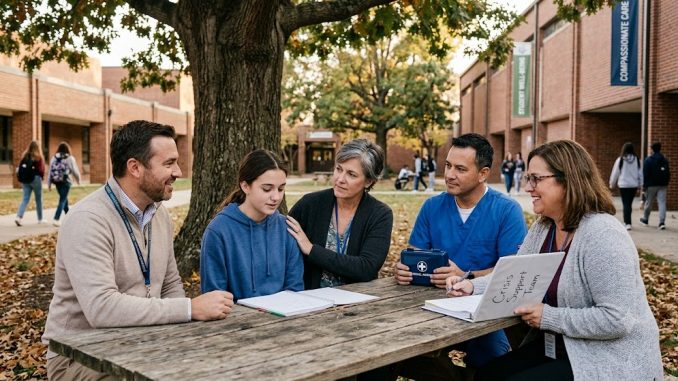
Schools are dealing with a level of student need that would have been difficult to imagine even a decade ago. Anxiety, trauma, housing instability, family disruption, and mental health emergencies now affect classrooms at every grade level.
While teachers and administrators remain central to student success, many of the most serious situations require a different kind of expertise. School social workers are often the professionals best equipped to respond when students are facing challenges that extend beyond academics and into family systems, mental health, and community support networks.
What School Social Workers Actually Do
The roles of school counselors, psychologists, and social workers often overlap, but each profession serves a different purpose within a school system. Counselors primarily focus on academic planning and student guidance, while psychologists specialize in assessment, learning disabilities, and behavioral evaluation. School social workers focus on the outside factors affecting a student’s ability to learn, including family instability, poverty, trauma, housing insecurity, and community systems involvement.
The modern social worker role includes crisis intervention, home visits, family advocacy, attendance support, coordination with outside agencies, and the development of individualized intervention plans for students with complex needs. Social workers regularly collaborate with child welfare agencies, juvenile justice systems, mental health providers, and housing organizations to help stabilize situations that interfere with educational access.
One of the most valuable parts of school social work is systems navigation. Students in crisis are often affected by multiple institutions at once, including healthcare systems, social services, courts, foster care systems, and special education frameworks. School social workers are specifically trained to understand how those systems connect and how to help families access support that would otherwise feel impossible to navigate.
The Students Who Most Need School Social Work Support
Students Experiencing Family Crisis and Instability
Some of the most vulnerable students in schools are dealing with circumstances that drain the emotional and cognitive energy needed for learning. Homelessness, domestic violence, parental incarceration, substance abuse in the home, foster care placement, and family separation all create instability that often shows up first through attendance problems, emotional withdrawal, or behavioral changes.
School social workers are trained to identify the root causes behind those warning signs. A student who appears disengaged may actually be moving between temporary housing situations or caring for younger siblings while a parent works overnight shifts. Social workers help connect these students and families to housing resources, food assistance, counseling services, transportation support, and crisis intervention programs that allow students to remain connected to school.
Effective intervention often depends on recognizing problems early. When schools only respond after academic failure occurs, recovery becomes much more difficult. Social workers help prevent that escalation by addressing barriers before they permanently disrupt a student’s educational trajectory.
Students in Acute Mental Health Crisis
Mental health emergencies in schools have become significantly more common in recent years. Students may present with suicidal ideation, panic attacks, self-harm behaviors, severe anxiety, trauma responses, or disclosures of abuse. These situations require immediate assessment and careful coordination between schools, families, and outside providers.
School social workers are trained in crisis assessment, safety planning, mandated reporting procedures, and emergency referral processes. They understand how to stabilize situations while also protecting student safety and ensuring legal obligations are met. Teachers and administrators are essential supports, but most do not receive the clinical training necessary for these situations.
Prevention work is equally important. Strong school social workers monitor attendance patterns, build relationships with high-risk students, conduct check-ins, and create systems that identify concerns before they become emergencies. Preventative support is often less visible than crisis response, but it plays a major role in reducing long-term student risk.
Students Navigating Systems Involvement
Many students must simultaneously navigate school while also interacting with outside systems such as foster care, juvenile justice, immigration proceedings, or special education services. These systems can create complicated legal and logistical challenges that directly affect attendance, academic consistency, and emotional wellbeing.
School social workers help families understand their rights and responsibilities within these systems. Under the Every Student Succeeds Act (ESSA), for example, students in foster care have protections related to school stability and enrollment. Under IDEA, students with disabilities are entitled to specific educational supports and procedural protections. Social workers often become the professionals ensuring those protections are actually implemented.
This advocacy work can have long-term effects on educational outcomes. Students who receive proper support during periods of instability are significantly more likely to remain engaged in school and avoid long-term academic disruption.
The Credential That Develops School Social Work Expertise
School social work requires both clinical skill and systems-level understanding. While bachelor’s-level professionals can support students in some capacities, the full scope of crisis intervention, case management, and independent assessment is most often associated with graduate-level social work training.
Programs designed for BSW to MSW advancement help professionals deepen their clinical assessment abilities, trauma-informed practice knowledge, and advocacy skills. Graduate-level preparation also develops stronger competencies in ethics, policy, mental health intervention, and multidisciplinary collaboration.
Advanced standing pathways are especially valuable for professionals already working in student support roles. These pathways build directly on existing social work foundations and allow practitioners to complete graduate preparation more efficiently while continuing to gain field experience.
Some graduate social work pathways also emphasize school-based practice specifically. Coursework in education law, child welfare systems, behavioral intervention, crisis response, and school-family collaboration prepares professionals for the realities of working inside educational environments where academic, emotional, and social challenges constantly intersect.
What Educators Can Do to Support School Social Work Effectiveness
School social workers are most effective when they operate as part of a coordinated support system rather than as isolated specialists. Teachers, administrators, counselors, psychologists, and support staff all contribute information that helps identify students in need of intervention. Consistent collaboration allows schools to respond earlier and more effectively.
The quality of referrals also matters. A referral that includes clear observations, behavioral changes, attendance concerns, emotional indicators, or family context gives social workers actionable information. Vague referrals based only on “bad behavior” or poor grades make intervention more difficult and less efficient.
Staffing remains one of the biggest barriers to effective student support. The National Association of Social Workers recommends a ratio of one school social worker for every 250 students, but many districts operate far above that threshold. High caseloads force social workers into reactive crisis management rather than preventative support, even though prevention consistently produces better long-term outcomes for students.
Professional development can also strengthen school-wide support systems. Teachers who understand trauma indicators, de-escalation strategies, and early warning signs are more likely to identify concerns before they become severe. Schools function best when student wellbeing is treated as a shared responsibility rather than something assigned to a single department.
Conclusion
Students in crisis need more than discipline systems or academic interventions alone. They need professionals who understand trauma, mental health, family systems, legal protections, and the outside barriers that affect educational success. School social workers provide that combination of clinical knowledge, advocacy, and systems expertise in ways few other school professionals are trained to do.
As schools continue responding to rising mental health and family instability challenges, the importance of strong social work support will only increase. The schools that create the best outcomes for vulnerable students will be the ones that invest in qualified social work professionals, support collaborative intervention systems, and prioritize prevention alongside crisis response.
