
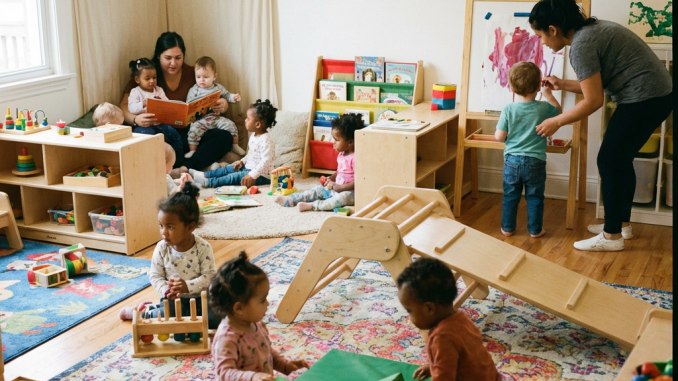
Early development in childhood starts before many adults even realize. The world is brand new. Everything is an opportunity for learning. Every surface is new, every scent is fresh. As children develop motor skills, they explore the world innocently through all five senses. Parents and professionals in children’s health and education can leverage that curiosity to support early development by supporting sensory-rich play.
The Brain and Body Respond to Sensory Input
The brain builds neural connections, and the body builds motor skills, and children learn emotional regulation through sensory experiences. It’s how we’re made as humans, that is, how we’re meant to develop.
But intentional sensory-rich play can enhance that learning process, which is why a toddler daycare with sensory play opportunities may be something that mindful parents and children’s health and education professionals should look at providing. Today, what’s often referred to as integrative education is increasingly found throughout the U.S. in early learning facilities.
Different Types of Sensory Experience Categorized
There are five main categories of sensory experiences:
- Tactile – touch-based interaction
- Auditory – sound exposure
- Visual – exciting the sense of sight
- Taste and smell – smelling and tasting
- Vestibular and proprioceptive – motor movement
Sensory Play Ideas for Sensory Experiences
Depending upon the age group, there are lots of practical play activities to match the five main categories of sensory experiences for a child.
Tactile
Materials should be a mix of textures, edges, temperatures, and shapes:
- sand box
- water play
- plush animals
- crinkly paper
Auditory
Sounds should be a mix of tones, volume, and rhythm:
- toys with sound
- background music playing
- bells
- xylophones
Visual
Not everything must be primary colors for kids. Include pastels, light and dark, and various patterns:
- shadow play
- flashlight play
- cloud watching
- trees blowing in the wind
Taste and Smell
Foods and interactions with other things should be experienced through smell and taste:
- food menu variety
- smelling flowers
- smelling cut grass
- tasting salt, sugar
Children’s taste buds may be more sensitive to certain tastes than adults, which is why many kids are picky eaters. It’s recommended to not force a child to eat food they dislike; instead offer many alternatives.
Motor Movement
Games that require movement of both big muscle groups and small muscle groups are best, such as:
- balancing on one foot
- making shapes with fingers
- swinging arms like a windmill
- free dancing to music (no choreography)
Cognitive Skills Enhancement Through Sensory Play
Sensory play helps to build cognitive skills in children of all ages in a way that nothing else does. It can involve problem-solving (how to peel a mandarin orange), teach cause and effect (tip the cup and the water spills onto the floor), and encourage experimentation (how far can the cup be tipped without spilling the milk?).
Supporting Emotional Regulation Through Sensory Experiences
Emotional regulation develops gradually, and sensory input plays a meaningful role in that process. Certain textures, movements, or sounds can help children feel more balanced. Others can boost their energy.
Running hands through soft materials can slow a child’s pace and steady breathing. Water play often has a similar effect, especially when the motion stays rhythmic. Activities that involve pushing, lifting, or jumping can help release extra energy in a controlled way.
These reactions connect directly to how the nervous system processes sensory input. Over time, children begin to recognize what helps them feel more comfortable or more alert. That awareness builds a foundation for self-regulation as they grow.
Creating a Balanced Approach to Early Learning
Sensory-rich play strengthens many areas of development at once. When children engage their senses regularly, they build a foundation that supports movement, communication, and emotional growth. Progress may appear gradually, yet it tends to be steady and lasting.
Parents and professionals who include these experiences in daily routines often notice meaningful shifts. Children show more curiosity, adapt more easily, and approach new activities with greater confidence.
Providing these opportunities on a consistent basis helps support development in a way that feels engaging and effective. Sensory-rich play offers a practical path forward, giving children the experiences they need to grow, explore, and build essential skills over time.
