
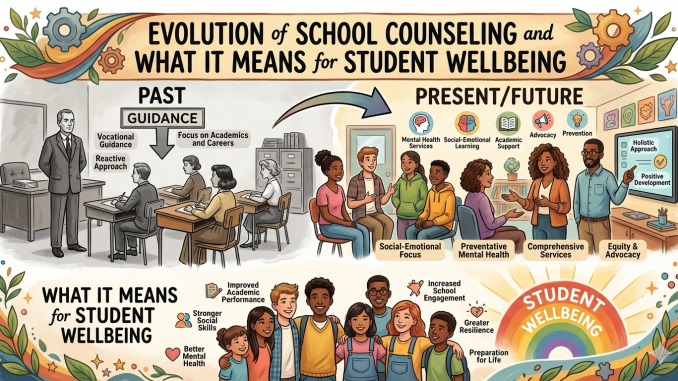
School counseling has undergone a fundamental transformation over the past two decades. What was once a role centered on scheduling classes and managing college applications has become a clinically informed, technology-enabled practice focused on student mental health, academic success, and overall development.
The stakes are difficult to overstate. Schools are now navigating rising levels of anxiety, depression, emotional dysregulation, and the lingering social effects of pandemic disruption, all of which show up daily in classrooms and hallways. School counselors sit directly at the intersection of these realities and the systems designed to respond to them, making their evolving role critical to student outcomes.
This article examines how school counseling has changed, what has driven that evolution, and how technology has expanded both reach and effectiveness.
From Gatekeepers to Student Advocates: How the Role Shifted
For much of the twentieth century, school counselors functioned primarily as administrative support.
Their responsibilities centered on course scheduling, academic records, and college application logistics, with occasional career guidance layered in. While student wellbeing was part of the role, it was not the primary focus, and training reflected that emphasis.
Several forces drove a significant shift in this structure. Research on early intervention, increased awareness of adolescent mental health as a public health concern, and the development of comprehensive frameworks by the American School Counselor Association (ASCA) all contributed to a redefinition of the role. Schools began to recognize that the traditional model was insufficient for addressing the real challenges students were facing.
Today’s school counselors operate as student advocates and mental health professionals within the educational system. Their work includes trauma-informed care, crisis response, developmental guidance, and culturally responsive support. The role is no longer about managing systems—it is about supporting people within those systems.
How Technology Has Expanded What School Counselors Can Do
Telehealth and Virtual Counseling
Virtual counseling has significantly expanded access to support. In the past, students in rural or under-resourced schools often had little to no access to qualified counseling professionals due to staffing shortages or geographic limitations. Telehealth platforms now allow schools to connect students with licensed counselors regardless of location, broadening access in a meaningful way.
The COVID-19 pandemic accelerated the adoption of these tools and changed professional expectations around their use. As explored in discussions around technology in school counseling, virtual sessions can reduce stigma, increase flexibility, and ensure continuity of care during disruptions. Many students engage more comfortably in a private digital setting than in a visible school office.
Data Systems and Early Identification
Data systems have reshaped how school counselors approach intervention. Instead of waiting for visible crises, counselors can now identify patterns in attendance, academic performance, and behavior that signal emerging concerns. This allows for earlier, more targeted support.
Some of the most impactful uses of data systems include:
- Identifying students with declining attendance or grades before issues escalate
- Tracking behavioral trends across classrooms and time
- Coordinating interventions based on real-time student data
These tools also improve collaboration. When counselors, teachers, and administrators share access to integrated systems, they can build more consistent and coordinated support plans for students.
Digital Mental Health Resources and Self-Help Tools
Student-facing digital tools have added another layer of support. Mental health apps, guided exercises, and online resources provide students with coping strategies and psychoeducation outside of scheduled sessions. This is especially important given that most counselors manage caseloads well above recommended levels.
However, access alone is not enough. Counselors play a key role in filtering and recommending appropriate tools, ensuring that students use resources that are evidence-based and developmentally suitable. This guidance helps students navigate a digital environment that can otherwise be overwhelming or inconsistent in quality.
The People Staffing the Evolving Role: Who Becomes a School Counselor Today
The pathway into school counseling has evolved alongside the role itself. Today’s counselors complete advanced training that includes both academic coursework and supervised clinical experience. This preparation reflects the complexity of the work and the expectation that counselors function as mental health professionals within schools.
A significant portion of the workforce comes from former teachers. The transition from classroom instruction to counseling is a natural progression for many educators who want to focus more directly on student wellbeing. Those considering this shift often explore resources related to becoming a school counselor as they move into the field.
Teachers bring a distinct set of strengths into counseling roles:
- Deep understanding of student behavior and development
- Familiarity with school systems and classroom dynamics
- Established communication and de-escalation skills
Schools benefit from this dual perspective. Counselors with teaching backgrounds often collaborate more effectively with staff and integrate support strategies into the academic environment with greater ease.
What This Evolution Means for Students
The most immediate benefit of this evolution is improved access to meaningful support. Students today are more likely to encounter counselors trained in evidence-based practices, trauma-informed care, and culturally responsive approaches. These competencies allow for more effective and relevant interventions.
At the same time, a significant gap remains. The ASCA-recommended counselor-to-student ratio is 1:250, yet the national average continues to exceed that number, often by a wide margin. This means that while the quality of counseling has improved, access is still limited for many students.
Educator awareness plays a crucial role in closing that gap. Teachers and administrators who understand the modern counseling role are better equipped to refer students appropriately and support broader mental health initiatives within the school. When the entire school community aligns around student wellbeing, the impact of counseling services becomes much more substantial.
Conclusion
School counseling has evolved from an administrative function into a central component of student support systems. It now combines clinical knowledge, developmental insight, and technology to address the complex realities students face. This shift reflects a broader understanding that student wellbeing and academic success are deeply connected.
The future of school counseling will depend on how schools address ongoing challenges. Staffing shortages, continued advances in technology, and the need for a diverse and well-trained workforce will shape what comes next. As the role continues to evolve, it will remain a critical part of how schools support the whole student—not just academically, but emotionally and developmentally as well.
