
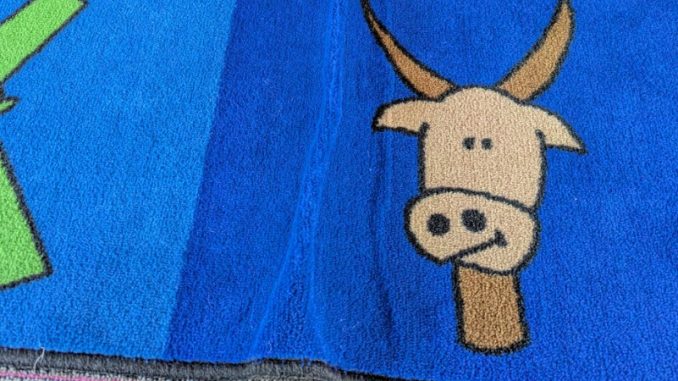
Why Your Classroom Rug
Develops Wrinkles
and What to Do About It
A new rug that develops wrinkles or bunching after a few months of use isn’t defective. In most cases, one of four preventable causes is responsible. Here’s how to identify which one and fix it.
A customer recently reached out with a frustrating experience: a new classroom rug that was looking beautiful in September had developed wrinkles and bunching by mid-year. The rug wasn’t defective. The construction was fine. But something in the installation environment was working against it, and the result was a rug that looked worn long before it should have been.
This is more common than most buyers realize, and in the vast majority of cases, it’s entirely preventable. Understanding the four causes of rug wrinkling and bunching can save a rug that looks like it’s failing when it actually isn’t.
Wrinkles and bunching in a classroom rug are almost never a manufacturing defect. They are almost always a placement or environmental issue that can be corrected once you know what to look for.
Cause 1: Rug Placed on Top of Another Rug
Common
The Rug-on-Rug Problem
When a classroom rug is placed on top of an existing rug or carpet, the two surfaces interact in a way that causes the top rug to migrate, bunch, and wrinkle over time. Here is what’s happening:
The backing of a classroom rug is designed to grip a smooth, hard floor surface — tile, hardwood, vinyl, or concrete. On these surfaces, the rubber or non-slip backing creates friction that holds the rug in place as children sit, stand, move, and play on it.
When placed on another rug or carpeted surface, that dynamic reverses. The underlying carpet is soft and compressible, with its own pile direction and surface texture. Instead of the backing gripping and holding, the two textile surfaces interact with each other as children use the top rug. Each step, each sitting-down, each transition creates small lateral forces. Over weeks and months, those forces accumulate. The top rug shifts, folds at the edges, develops ridges, and eventually wrinkles in ways that look permanent even though they aren’t.
The problem is compounded in classrooms because the forces aren’t random — they follow consistent traffic patterns. Children always enter from the same direction, always sit in the same spots, and always move through the same paths. Over months, those repeated directional forces push the rug consistently in one direction, creating predictable wrinkle locations along the leading edges.
Move the classroom rug to a hard floor surface. If the room is fully carpeted, use a purpose-made rug gripper or rug pad specifically designed for carpet-on-carpet installation — these use a different grip mechanism than standard rug pads and create the holding friction that direct carpet-to-carpet contact cannot. For most classrooms, moving to a hard floor section will immediately resolve the issue and allow the rug to lie flat again within a few days.
Other Reasons Rugs
Wrinkle and Bunch
Inadequate Backing on Slippery Hard Flooring
Some hard floor surfaces — particularly polished tile, waxed vinyl, and sealed hardwood — are slippery enough that even a commercial-grade rug backing struggles to maintain grip under heavy use. The rug moves in micro-increments with each step, and over months those increments accumulate into visible bunching.
This is more common with lighter-weight rugs and on floors that have been recently waxed or finished. The problem is also worse in classrooms where children frequently drag heavy objects across the rug or push off hard from seated positions.
Uneven Traffic Wear and Directional Pile Compression
Classrooms create highly predictable traffic patterns. Children enter from one direction, sit in assigned spots, and move through the same paths hundreds of times. This directional repetition creates uneven pile compression — some areas of the rug are pushed flat and compacted while others remain at their original height. The height difference creates surface tension that, over time, causes the rug to buckle or develop ridges along the boundaries between heavily-used and lightly-used zones.
This cause is most visible mid-rug where the transition between a heavily-trafficked path and a low-traffic area creates a visible ridge or fold.
Shipping Memory from Rolling
New rugs frequently arrive rolled tightly for shipping. When a rug has been rolled for days or weeks, the fibers and backing develop a “memory” of the curved position. When unrolled, the rug wants to return to that curve, and if it isn’t allowed to fully relax and flatten before being put into heavy use, those curves can become established as permanent-looking wrinkles along the grain of the original roll.
This is most noticeable as parallel ridges across the width of the rug at regular intervals — the visual signature of a rolled-shipping wrinkle.
Four Prevention
Best Practices
Hard Floor Placement First
Whenever possible, place classroom rugs directly on hard flooring. This is the single most effective prevention measure and eliminates the most common cause entirely.
Use the Right Rug Pad
Match the rug pad type to the floor surface. Hard-floor pads and carpet-over-carpet pads use different grip mechanisms. Using the wrong type adds no protection and may make things worse.
Rotate the Rug Mid-Year
A single 180-degree rotation at semester break redistributes traffic wear and prevents directional pile compression from becoming a permanent wrinkling pattern.
Rest New Rugs Before Use
Unroll new rugs 24 to 48 hours before placing them into service. Warm rooms help the fibers relax faster. Never put a fresh-from-the-box rug directly under heavy foot traffic.
The Rescue Guide:
Flattening a Wrinkled Rug
If a rug has already developed wrinkles or bunching, the situation is almost always recoverable. The key is to address the cause first, then work on flattening the rug — doing it in the reverse order won’t last.
Remove the Cause
Identify and fix the underlying reason: move the rug off another rug, add a proper rug pad, or address the traffic pattern. No flattening technique will hold if the cause is still present.
Roll Backward
Roll the rug in the opposite direction of the wrinkle for several hours. For a rug that bunches toward one end, roll it from that end. This counteracts the fiber memory that is holding the wrinkle shape.
Use Gentle Heat
Laying the rug in a warm, sunny room or using a hairdryer on a low setting over the wrinkled area can help the fibers relax and release the compressed shape. Do not use high heat directly on the rug face.
Lay Flat with Weight
After rolling backward and applying gentle heat, lay the rug completely flat and place heavy, flat objects (books, storage bins) evenly across the previously wrinkled area for 24 to 48 hours. The combination of time and even pressure typically restores the rug to flat.
If Wrinkles Persist
Stubborn wrinkles that don’t respond to the above steps may need professional carpet stretching, which a local carpet installer can perform quickly and inexpensively. This is rarely needed for classroom rugs but is always an option for severe cases.
If you have a SensoryEdge rug that has developed wrinkles and you’ve ruled out the causes above, contact us directly. In some cases what looks like wrinkling is a warranty issue we want to know about. We’d rather hear from you than have you assume it’s normal. It usually isn’t.
Shop Commercial-Grade
Classroom Rugs
Rugs designed for daily classroom use, built with commercial-grade backing and construction to stay flat, stay safe, and perform year after year. Free shipping on every order.
