
Rainbow’s
Treasure Hunt
A magical quest across the lands of the Rainbow Reverie Rug
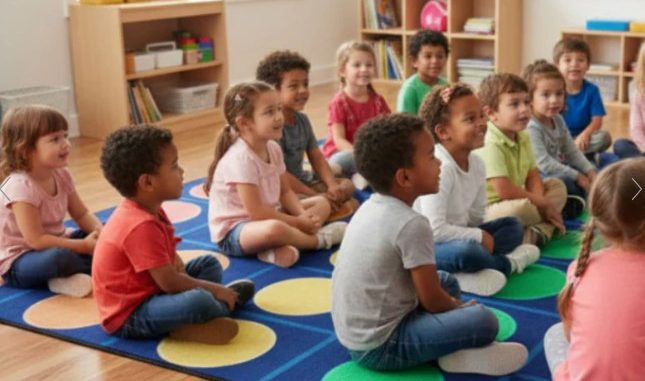
This activity takes everything wonderful about the Rainbow Reverie Seating Grid Rug — its six vivid color zones — and turns them into a living, breathing treasure map. No props required beyond the rug itself (though a small unicorn plush makes a perfect special guest).
What makes it special is the combination: a story unfolds in real time, children make decisions based on what they hear, and every hop is a small act of listening, reasoning, and color recognition working together. It ends with a rhyme, a cheer, and a class that just solved a problem together.
Six Lands, Six Treasures
Each color square on the Rainbow Reverie Rug represents a different land in Rainbow’s world. Assign one treasure to each land before you begin.
How to Begin the Quest
Four Steps to a Successful Quest
Read the story opener aloud to set the scene. The narrative does the heavy lifting — it creates immediate investment (“Rainbow needs us!”) without any props or setup required. Even one minute of story context transforms a color-hopping exercise into a meaningful adventure.
Pause at the end of the opener and ask: “Do you think we can help her?” The answer will be a unanimous, emphatic yes.
Read one clue at a time — clearly and with a little theatrical mystery. Give students a moment to think, then invite them to hop, step, or tiptoe to the color square they believe holds the treasure.
The key is pacing: let students process the clue before they move. The thinking is the learning. See the six example clues below — or write your own to match your class’s vocabulary and current themes.
After each hop, extend the learning with a quick follow-up question to 2–3 students while everyone is on their color square:
“Can you name something that’s blue like the Sky Lagoon?” · “What animals might live in Forest Grove?” · “What sounds do you think Lava Land makes?”
This keeps the whole class engaged between hops and builds vocabulary through connection rather than rote recall.
After all six treasures are found, have students return to their starting spots. Produce the Rainbow puppet or plush — she “appears” to thank the class for their help.
End with the group cheer (below). The structured ending gives the activity a clear, celebratory conclusion that children can anticipate and look forward to repeating.
Six Clues for Six Lands
Read one clue per round. Students listen, think, and hop to the matching color square. Write your own clues to match your class’s vocabulary, current themes, or favorite places.
Make It Even More Magical
Add Transition Music
Play soft, adventurous music between clues and pause it when students need to think. Music signals movement; silence signals reasoning time.
Paper Treasure Cutouts
Give students small paper cutouts of each treasure. When a land is “found,” a student places the cutout on that color square — a visual record of progress across the rug.
Rotate Clue Readers
Let students take turns reading the clues aloud. This builds confidence in speaking, adds ownership to the game, and creates a subtle literacy moment in every round.
The Pedagogy Behind the Magic
Highly Engaging
Combining storytelling with physical movement and critical thinking keeps attention sustained in a way that worksheets or passive listening simply can’t match for this age group.
Flexible by Design
Run it with 30 students or 6. Use the full six-clue arc or pick three. The rug and the story do the heavy lifting — you adapt the rest to wherever your class is today.
Radically Inclusive
No winners, no losers, no elimination. Everyone plays together toward a shared goal, which means every child is celebrated at the end regardless of confidence or ability level.
Genuinely Educational
Color recognition, vocabulary building, listening comprehension, following multi-step directions, and gross motor coordination — all happening at once, all feeling like play.
Get the Rainbow Reverie Seating Grid Rug
Six vivid color zones. The perfect quest map. The Rainbow Reverie Rug is where this adventure lives — and it’s ready for your classroom.
